
Someone asks ChatGPT about your industry. It gives a detailed answer and cites three sources. You're not one of them. That's the problem AI search optimization solves. ChatGPT processes 37.5 million queries per day. Perplexity handles 100+ million per week. Google AI Overviews show up on 30% of results pages. These aren't experiments. They're where your buyers are doing product research right now. And Semrush's 2025 data shows visitors from AI search citations convert at 4.4x the rate of traditional organic clicks. That's not a rounding error. That's a channel you can't afford to ignore.
AI search visitors convert 4.4x better than traditional organic (Semrush 2025). Each platform has different crawlers and selection criteria. This guide walks you through robots.txt configuration for every AI crawler, the schema markup types that actually drive citations, content formatting that gets extracted, and tools to track whether you're showing up.
What You'll Learn
- How each AI search platform discovers, evaluates, and selects content to cite
- Robots.txt configuration for OAI-SearchBot, PerplexityBot, Google-Extended, ClaudeBot, and bingbot
- Schema markup types that directly feed AI-generated answers — Article, FAQ, HowTo, Speakable
- Content formatting templates that make pages easy for LLMs to extract and cite
- How to track whether your content is appearing in AI search results
- The difference between real-time retrieval and training-based models — and why it matters

Why AI search optimization matters now
Google still handles 8.5 billion searches a day. Nobody's arguing that. But ChatGPT now has over 400 million weekly active users, and a growing chunk of those queries pull from the live web. Bing Copilot is baked into Windows, Edge, and Microsoft 365. These platforms don't just list links. They synthesize answers and cite sources. If your content gets cited, you're being recommended. Not just indexed. Recommended.
Here's why the economics matter. That 4.4x conversion premium exists because AI search users ask very specific, high-intent questions. Think "best project management tool for remote teams under 50 people." They get a synthesized comparison. If you're cited in that answer, you skipped the entire funnel. You went from stranger to trusted recommendation in a single interaction. No click-through. No bounce. Just trust.
AI search optimization vs. GEO vs. SEO
<a href="/blog/what-is-geo">GEO (generative engine optimization)</a> is the broad discipline. AI search optimization is the tactical subset focused on search-specific AI products. Traditional SEO targets Google's link-based index. As covered in our <a href="/blog/geo-vs-seo">GEO vs. SEO comparison</a>, most AI search optimization builds on strong SEO fundamentals but adds platform-specific requirements on top.
Platform-by-platform optimization guide
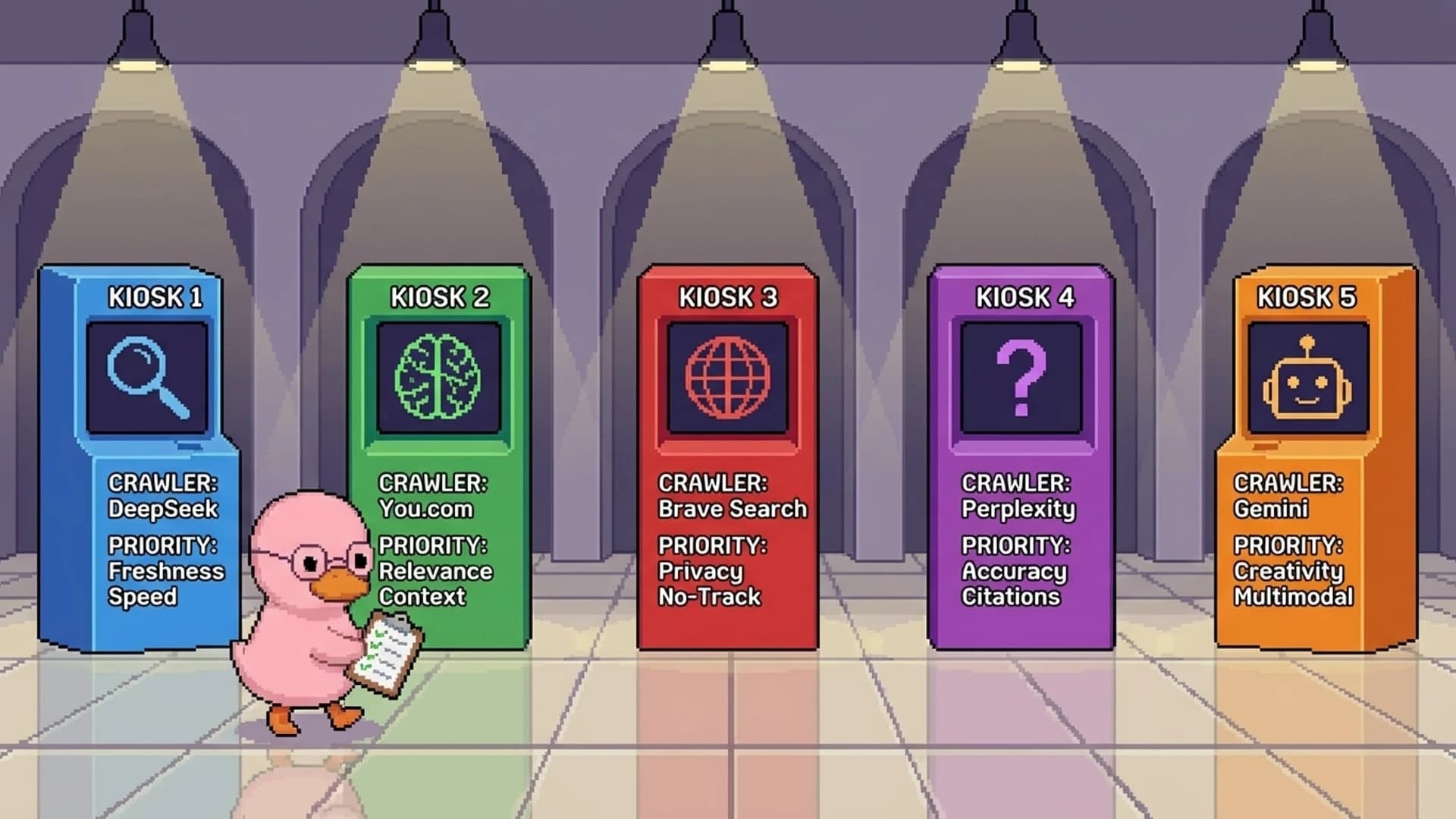
Every AI search platform follows the same basic loop: crawl content, run it through a language model, generate an answer with citations. But they differ in how they crawl, what they prioritize, and which sources they cite. There are two retrieval models. Real-time (ChatGPT Search, Perplexity, Google AI Overviews, Bing Copilot) and training-based (Claude, base ChatGPT without search). Most platforms now use a hybrid. You need to optimize for both.
ChatGPT Search
ChatGPT uses OAI-SearchBot for real-time crawling and GPTBot for training data. It heavily favors authoritative domains, clear H2/H3 hierarchies, recent publish dates, and unique first-party data. If you're a smaller site, niche topical authority is your lever. Be the definitive source on your specific topic, even if your domain is tiny. Allow both crawlers in robots.txt for maximum visibility.
Perplexity
Perplexity is citation-first. Every answer includes numbered source links your reader can click. It weights recency heavily (content updated within 30-90 days wins), rewards citation density in your own writing, and pulls direct answers from the first 1-2 sentences after each heading. FAQ sections, comparison tables, and numbered lists get extracted far more often than narrative prose. Allow PerplexityBot in robots.txt.
Google AI Overviews
Here's the catch with Google AI Overviews: they pull primarily from pages already ranking in Google's traditional index. If you don't rank organically, you won't appear in the AI Overview. Traditional SEO is the foundation. AI-specific optimization is the layer on top. Structured data (FAQ, HowTo, Speakable schema) directly feeds AI Overviews. Google has explicitly confirmed this. Allow Google-Extended in robots.txt.
Claude and Bing Copilot
Claude relies on training data, so allow ClaudeBot so Anthropic can crawl your content. Factual accuracy and definitional clarity matter most for training-based retrieval. Bing Copilot uses Bing's existing index plus GPT-4 for synthesis. Submit your sitemap to Bing Webmaster Tools and use IndexNow for instant URL submission when you publish. Both reward well-structured, clearly attributed content.
Robots.txt and schema markup for AI search
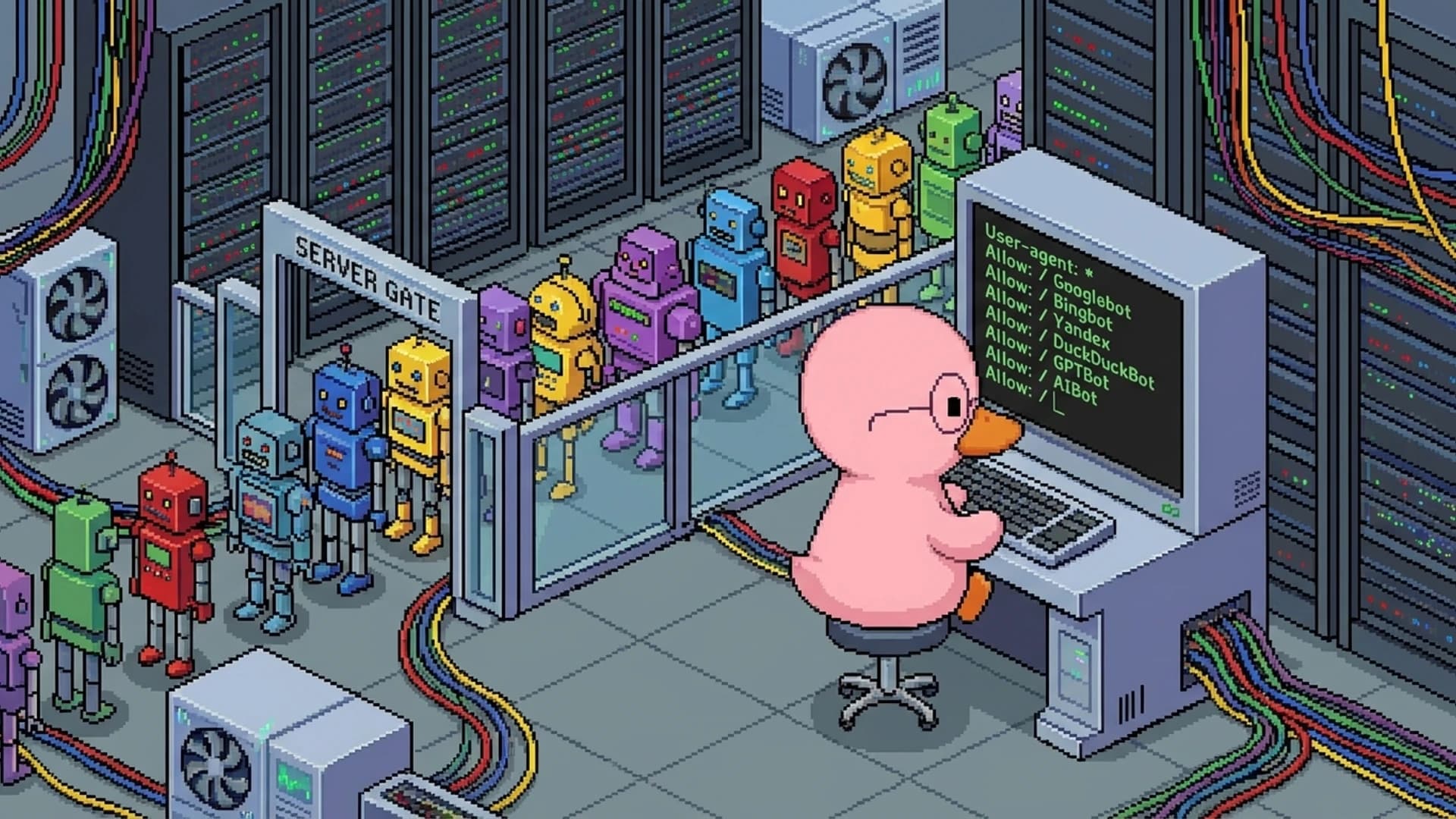
This is the most common AI search mistake, and the most damaging. Many CMS platforms, WordPress security plugins, and CDN configurations block GPTBot, PerplexityBot, and ClaudeBot by default. You could be doing everything else right and still be completely invisible to AI search because of one line in your robots.txt. Go check yours today. Seriously. It takes five minutes.
Complete AI-friendly robots.txt
Add these lines to your robots.txt: Allow GPTBot, OAI-SearchBot, PerplexityBot, Google-Extended, ClaudeBot, and bingbot with Allow: / on each. Block only sensitive directories like /admin/ and /dashboard/. Most sites can copy this pattern directly. If you're on WordPress, check your SEO plugin settings — many block AI crawlers by default.
Now for schema markup. Think of it as giving AI platforms a cheat sheet about your content. What it is, who wrote it, what questions it answers, and which sections are most quotable. The essential types: Article schema (baseline for every post), FAQ schema (highest single impact for AI visibility), HowTo schema (for step-by-step guides), and Speakable schema (signals which content is most extractable). Google has stated explicitly that structured data feeds AI Overviews. This isn't optional anymore.

duqky's Content Worker formats every blog post for AI search automatically — FAQ sections with schema markup, structured heading hierarchies, definition-first paragraphs, and embedded statistics. Built for both Google and AI search engines from day one.
See how it works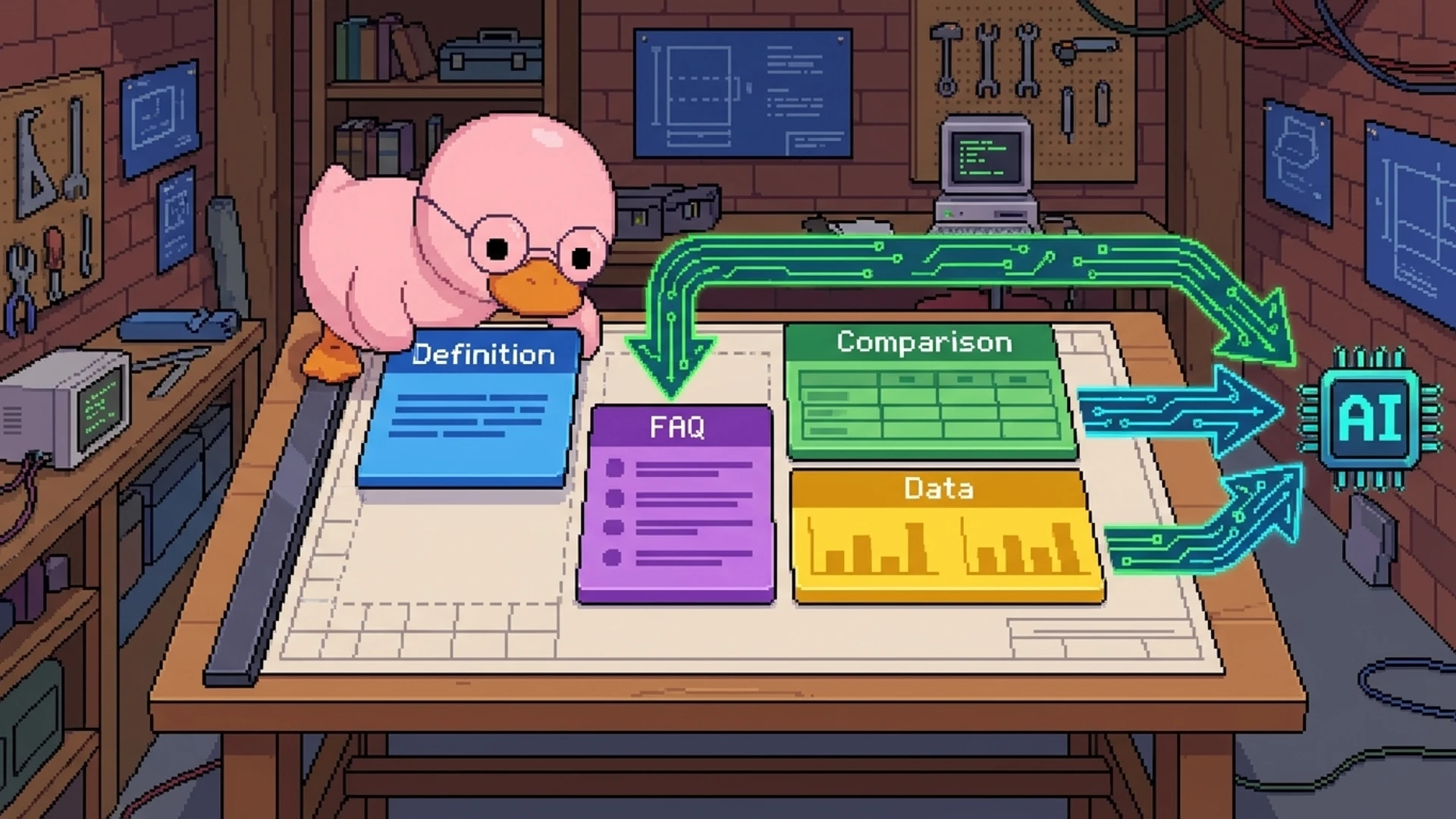
Content formatting that gets cited
AI platforms don't read the way you do. They parse content programmatically, scanning for chunks they can cleanly extract and drop into an answer. Four formatting patterns consistently outperform unstructured prose.
- <strong>The definition pattern:</strong> Start every section with a direct answer in the first 1-2 sentences after a heading. Don't write "Many people wonder what AI search optimization is." Write "AI search optimization is the practice of making your content citable in AI-powered search engines." Answer first. Context second.
- <strong>The comparison pattern:</strong> For "X vs Y" or "best tools for Z" queries, use tables, feature matrices, or consistently formatted bullet points with bolded category names. AI platforms extract structured comparisons far more reliably than narrative paragraphs.
- <strong>The statistic pattern:</strong> Embed numbers in self-contained sentences with source attribution. "Semrush found that AI search visitors convert at 4.4x the rate of organic visitors (2025)." That sentence is designed to be quoted whole. The AI can pull it without needing context.
- <strong>The FAQ pattern:</strong> FAQ sections paired with FAQPage schema are the single most effective format for AI search visibility. Keep every answer self-contained in 2-3 sentences. Target exact questions from "People Also Ask" results.

How to track AI search visibility
Here's the frustrating part. Unlike Google Search Console, AI platforms don't give you publisher analytics. You can't just log in and see your citation count. You need a combination of manual checks and third-party tools.
- <strong>Manual tracking:</strong> Query your target keywords in each AI platform weekly. Monitor referral traffic from perplexity.ai, chatgpt.com, and bing.com in Google Analytics. Check server logs for GPTBot, OAI-SearchBot, PerplexityBot, and ClaudeBot crawl activity.
- <strong>Entry-level tools ($25-99/mo):</strong> Otterly.ai ($25/mo), Peec AI ($49/mo), and Profound ($99/mo) track AI citations across platforms. Good for smaller teams getting started.
- <strong>Mid-range with SEO suites ($129-199/mo):</strong> Semrush and Ahrefs now include AI Overview tracking in their existing plans. If you already pay for either, this is your most cost-effective starting point.
- <strong>Enterprise ($3,000+/mo):</strong> BrightEdge AI Search Intelligence for large organizations needing comprehensive cross-platform monitoring.
Building a systematic AI search pipeline
One-off optimization doesn't work here. AI search platforms weight recency, freshness, and topical authority. All three demand consistent production. Here's a simple way to think about it. A single page gets cited occasionally. A cluster of 5-10 interlinked pages on the same topic gets cited consistently. Build topical clusters around your core topics, apply the formatting templates above to every page, update content monthly with fresh data and expanded FAQ sections, and track which pages earn citations so you can replicate the pattern.
Internal link cluster example
This post is part of duqky's GEO content cluster, which also includes guides on what GEO is, GEO vs. SEO, and generative engine optimization. Topical clusters are how you build the authority AI platforms look for.

Frequently asked questions
Frequently Asked Questions
AI search optimization is how you make your content visible and citable across AI-powered search platforms like ChatGPT, Perplexity, Google AI Overviews, Claude, and Bing Copilot. It builds on traditional SEO but adds platform-specific requirements for crawler access, structured data, and content formatting.
Four steps. First, allow AI crawlers in robots.txt (GPTBot, OAI-SearchBot, PerplexityBot, ClaudeBot, Google-Extended). Second, implement Article, FAQ, and Speakable schema. Third, format content for extraction with direct answers first, self-contained FAQ responses, and statistics with inline source attribution. Fourth, update content regularly so recency signals stay fresh.
Semrush's 2025 research found AI search visitors convert at 4.4x the rate of traditional organic visitors. They ask specific, high-intent questions and get synthesized comparative answers. By the time they click through to your site, they're already pre-qualified.
Entry-level: Otterly.ai ($25/mo), Peec AI ($49/mo), Profound ($99/mo). Mid-range: Semrush and Ahrefs include AI Overview tracking in existing plans ($129-199/mo). Enterprise: BrightEdge ($3,000+/mo). Manual tracking through server logs and referral analytics is free.
Close, but not the same thing. GEO is the broader discipline covering all AI-generated outputs, including chatbots, voice assistants, and embedded AI. AI search optimization is the tactical subset focused specifically on search products like ChatGPT Search, Perplexity, and Google AI Overviews.
Allow them. Blocking GPTBot, PerplexityBot, and ClaudeBot makes your content invisible to AI search. Many CMS platforms and security plugins block these by default. Go check your robots.txt right now. The five minutes it takes could be the highest-ROI SEO task you do this quarter.

duqky's Content Worker builds every blog post for AI search from day one. Schema markup, structured headings, definition-first formatting, and FAQ sections are all included automatically. Start free with 500 credits.
Get started free