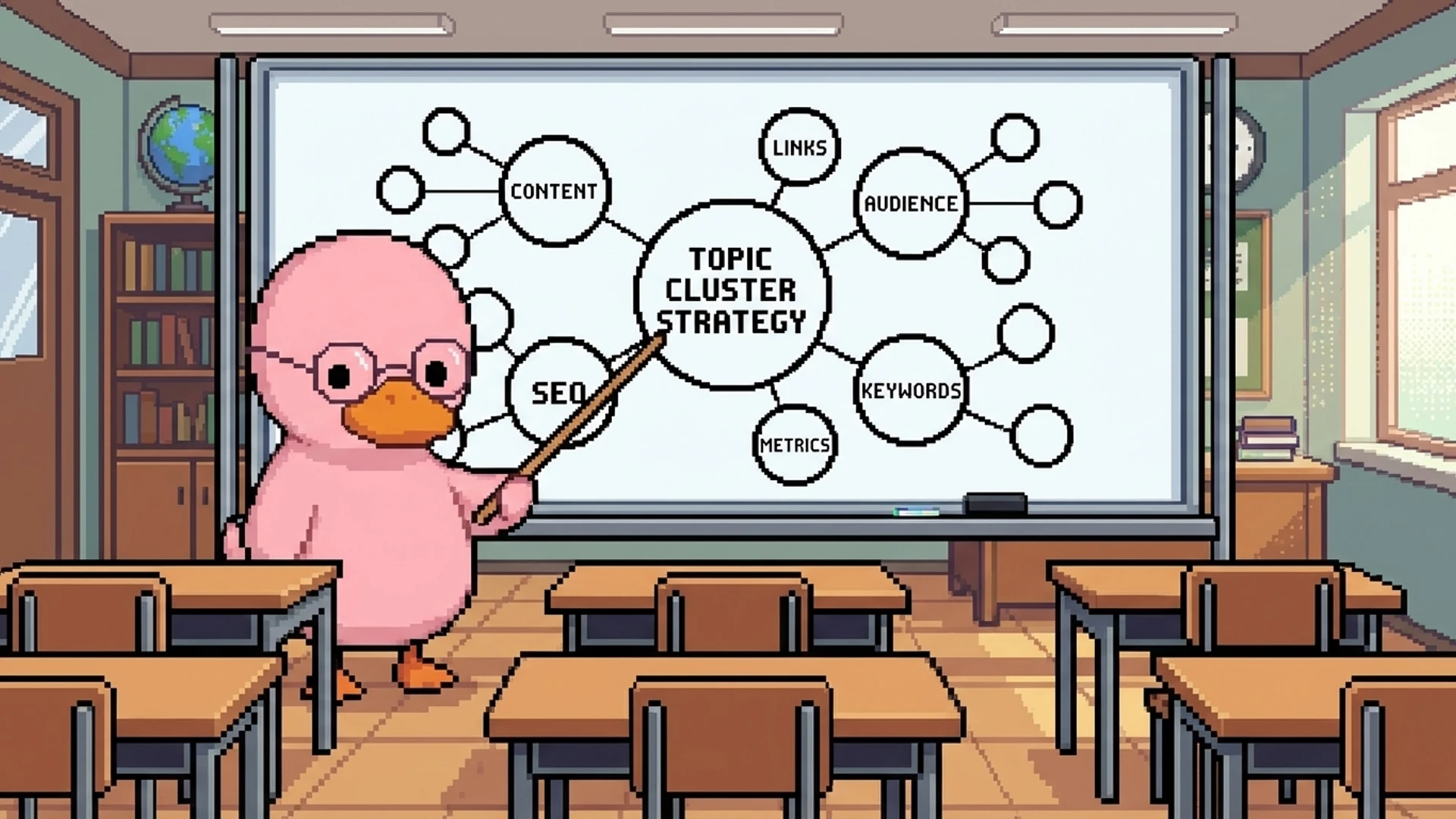
Topical authority is the single most important concept in SaaS SEO right now, and most founders still get it wrong. They publish scattered blog posts chasing random keywords and wonder why nothing ranks. The sites winning organic search in 2026 aren't publishing more content. They're publishing strategically interconnected content that tells search engines: "We are the definitive source on this subject." This guide breaks down exactly how to do that.
Topical authority means Google recognizes your site as the go-to resource on a specific subject. For SaaS companies, this means building 3-5 content clusters around your core topics, each with a pillar page and 8-15 supporting articles. It takes 12-16 weeks to build your first cluster. AI agents can compress that timeline significantly by handling execution while you focus on strategy.
What You'll Learn
- What topical authority actually means (and why it's different from domain authority)
- Why topical authority matters even more in 2026 with AI Overviews and ChatGPT search
- A step-by-step framework for building topical clusters for SaaS
- A 12-week roadmap for building your first content cluster from scratch
- How to measure topical authority with real metrics
- How AI agents accelerate topical authority building

What topical authority actually is (and isn't)
Topical authority is Google's confidence that your site deeply understands a specific subject. It's different from domain authority (a third-party metric from Moz/Ahrefs) and different from E-E-A-T (which is about credibility signals). Topical authority is specifically about coverage depth and content interconnection within a topic area.
Here's a simple way to think about it. If someone asked Google "who knows the most about [your topic] on the internet?", would your site be in the conversation? Topical authority is earned when you've covered a subject so thoroughly that Google has dozens of data points confirming your expertise. Not one great article. Dozens of great, interconnected articles.
What topical authority is not: publishing 50 thin articles about vaguely related keywords. Google can tell the difference between genuine depth and keyword-stuffed filler. A site with 15 deeply researched, strategically linked articles on a topic will outrank a site with 50 shallow ones every time.

Why topical authority matters more in 2026
Three shifts have made topical authority the defining factor in organic search this year.
AI Overviews are eating simple queries
Google's AI Overviews now answer straightforward questions directly in the search results. If your content strategy relies on ranking for basic informational queries ("what is X"), you're losing clicks to the AI summary. The queries that still drive traffic are complex, nuanced, and specific. The kind of queries that only a site with genuine topical depth can answer well.
ChatGPT search and Perplexity are fragmenting discovery
People are increasingly finding information through AI chat interfaces instead of traditional search. These tools cite sources, and they heavily favor sites with comprehensive, authoritative coverage. If your site has a single article on a topic, it's unlikely to be cited. If you have a full cluster with 10+ interlinked pieces, you're much more likely to appear as a cited source in AI-powered search results.
Google's ranking systems reward depth over breadth
The 2025 and 2026 core updates have consistently rewarded sites that demonstrate genuine expertise. The helpful content system specifically looks for sites where content is created by people (or systems) with real knowledge. Topical authority is the structural signal that tells Google your content comes from a place of deep understanding, not surface-level keyword matching.
The SaaS topical map framework
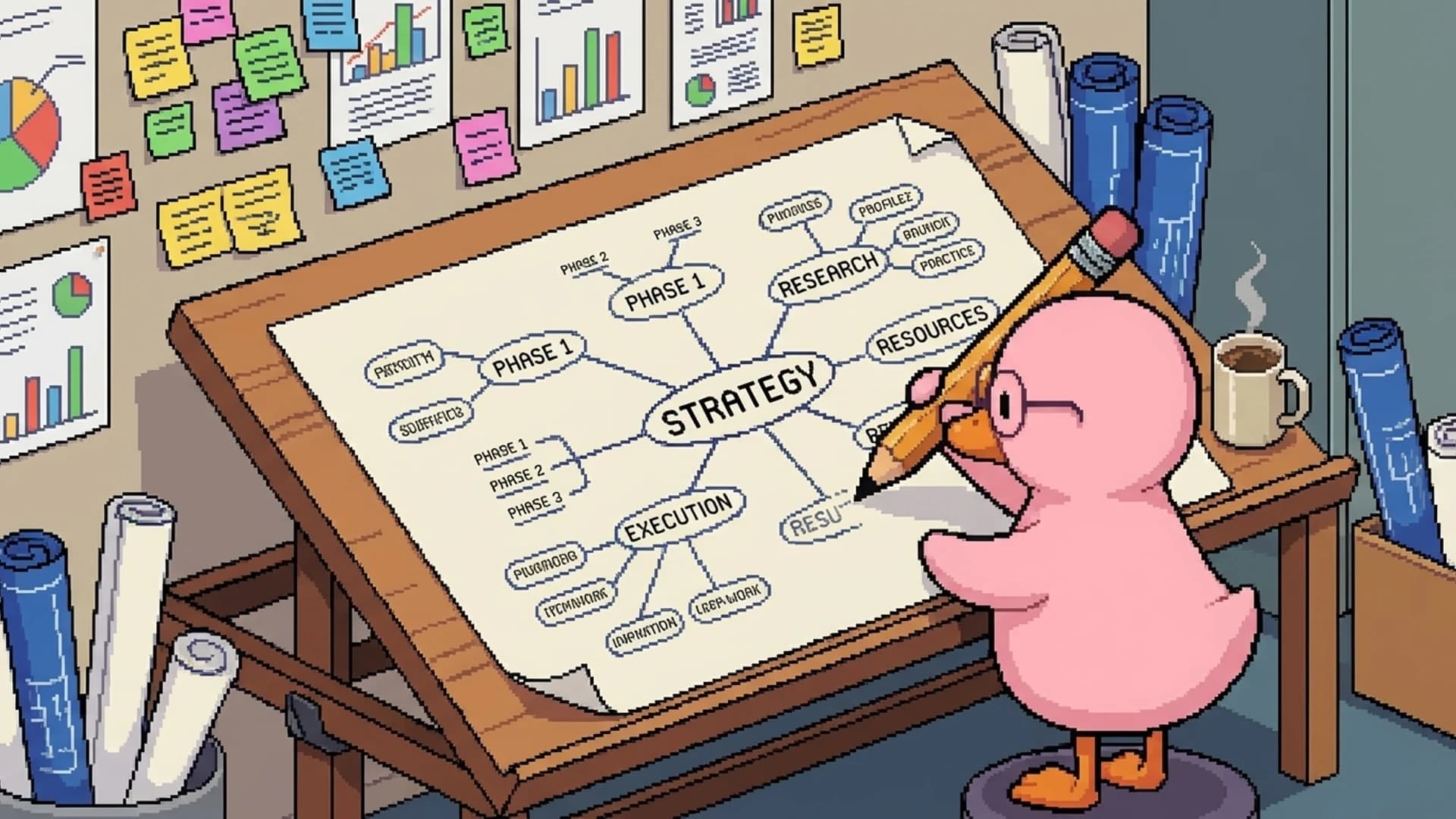
Building topical authority starts with a topical map. This is your strategic blueprint. It defines what clusters you'll build, what pillar pages anchor each cluster, and what supporting articles fill in the depth. Here's the framework.
Step 1: Identify 3-5 core topic clusters
Your clusters should map directly to your product's value propositions and your audience's problems. For a SaaS company, typical clusters might include your product category (e.g., "project management"), your audience's core challenge (e.g., "remote team productivity"), your differentiation angle (e.g., "AI-powered automation"), and an adjacent topic that earns backlinks (e.g., "future of work").
Choosing clusters
Start with the cluster closest to your product's core value proposition. If you sell SEO software, your first cluster should be about SEO, not "digital marketing" or "startup growth." Go narrow first. You can always expand later.
Step 2: Build each cluster with a pillar + supporting structure
Each cluster has one pillar page and 8-15 supporting articles. The pillar page is a comprehensive overview (2,000-4,000 words) targeting your cluster's head keyword. Supporting articles target long-tail variations and subtopics, each linking back to the pillar and to each other.
Example cluster for a SaaS SEO tool:
- Pillar: "The Complete Guide to SaaS SEO"
- Supporting: "How to Do Keyword Research for SaaS"
- Supporting: "SaaS Content Marketing Strategy"
- Supporting: "Technical SEO Checklist for SaaS Websites"
- Supporting: "How to Build Backlinks for SaaS"
- Supporting: "SaaS SEO Metrics That Actually Matter"
- Supporting: "Content Clusters for SaaS: A Step-by-Step Guide"
- Supporting: "SaaS Blog SEO: From Zero to 10K Monthly Visitors"
- Supporting: "Competitor SEO Analysis for SaaS Companies"
- Supporting: "How to Rank on the First Page for SaaS Keywords"
Step 3: Map internal links before you write
Before writing a single article, plan your internal linking structure. Every supporting article should link to the pillar page. Every supporting article should link to 2-3 other supporting articles in the same cluster. The pillar page should link to every supporting article. And cross-cluster links should connect related topics. This planning step is what separates strategic content from random blog posts.

Building your first cluster: a 12-week roadmap
Here's a practical week-by-week plan for building your first topical cluster from scratch. This assumes you're publishing 2 articles per week, which is the minimum cadence for building authority efficiently.
Weeks 1-2: Research and planning
- Finalize your cluster topic and validate with keyword research
- Identify 10-15 supporting article topics with keyword data (volume, difficulty, intent)
- Create your internal linking map
- Write and publish your pillar page
- Set up tracking (rank tracker, analytics, GSC)
Weeks 3-6: Foundation building
- Publish 2 supporting articles per week (8 articles total)
- Prioritize low-difficulty, high-relevance keywords first
- Add internal links from each new article to the pillar and existing supporting articles
- Update the pillar page with links to each new supporting article
- Begin light outreach for your pillar page
Weeks 7-10: Expansion and link building
- Publish remaining supporting articles (4-6 more articles)
- Review early articles and update with new internal links
- Ramp up outreach for pillar and top supporting pages
- Monitor initial ranking data and adjust strategy if needed
- Create a data-driven or original research piece to earn natural links
Weeks 11-12: Optimization and measurement
- Audit all internal links across the cluster (fix gaps)
- Refresh any underperforming articles based on early ranking data
- Run a full content quality pass: accuracy, freshness, completeness
- Document baseline metrics for ongoing tracking
- Plan your second cluster based on what you learned

Want to skip the 12-week manual grind? duqky's agents can build your first content cluster in hours, not months.
See how it works
Measuring topical authority
Topical authority isn't a single metric you can check in a dashboard. It's a composite signal you measure through multiple proxies. Here are the metrics that matter.
Topic Share
Topic Share is the percentage of keywords in your cluster where your site ranks on page one. If your cluster targets 50 keywords and you rank in the top 10 for 15 of them, your Topic Share is 30%. Track this monthly. A healthy topical authority strategy should show consistent upward movement in Topic Share over 6-12 months.
Cluster coverage percentage
This is simpler: what percentage of your planned supporting articles have been published? A cluster with 3 out of 12 articles published has 25% coverage. Google starts recognizing topical authority once you hit roughly 60-70% coverage with quality content. Below that, you're still building the foundation.
Ranking distribution
Don't just track whether you rank. Track where you rank across your cluster. A healthy distribution shows articles moving from positions 30-50 to positions 10-20 to positions 1-10 over time. If your articles are stuck in positions 20-30 after three months, you likely need more supporting content or more backlinks.
Organic traffic per cluster
Group your analytics by cluster to see which topic areas are driving the most traffic. This tells you where your topical authority is strongest and where you need to invest more. A well-built cluster should show exponential traffic growth as articles start supporting each other in search results.

How AI agents accelerate topical authority
Building topical authority manually is a grind. That 12-week roadmap assumes you have the bandwidth to research, write, optimize, and publish 2 articles per week while also managing internal linking and outreach. Most SaaS founders don't.
This is where AI SEO agents change the equation. An autonomous content agent can handle the entire execution layer of your topical authority strategy. You set the cluster topics and quality standards. The agent does the keyword research, generates briefs, writes the articles, optimizes for SEO, publishes on schedule, and maintains your internal linking structure across every piece.
The timeline compresses dramatically. Instead of 12 weeks to build a cluster, an agent can do it in 4-6 weeks at higher consistency and lower cost. And because the agent handles internal linking programmatically, it never misses a link opportunity. The linking structure is always complete and up-to-date.
Pair the content agent with an outreach agent, and you're building both content authority and backlink authority simultaneously. The outreach agent earns links to your pillar pages while the content agent builds depth. This dual approach is how duqky clients build topical authority 2-3x faster than manual teams.
Real-world example
duqky's own site uses this exact framework. Our agents built our SEO content cluster from zero to 15 interlinked articles in a few hours, with the outreach agent earning backlinks to pillar pages simultaneously. We practice what we preach.
Frequently asked questions
Frequently Asked Questions
Start with one. Seriously. Building one cluster well teaches you the process and gives you data to optimize. Once your first cluster is at 60%+ coverage and showing ranking improvements, start your second. Most SaaS companies eventually have 3-5 clusters, but they don't build them all at once.
A single cluster takes 12-16 weeks to build manually (research through publication). You'll start seeing ranking improvements 4-8 weeks after the cluster is mostly complete. Meaningful organic traffic growth usually appears around month 4-6. With AI agents handling execution, you can compress the building phase to 4-6 weeks.
Yes, but it takes longer because you're also building domain authority from scratch. New domains should target lower-difficulty keywords aggressively and invest in outreach/link building from day one. Topical authority actually helps new domains punch above their weight, because Google starts trusting your site faster when it sees comprehensive coverage of a topic.
We recommend 8-15 articles per cluster (1 pillar + 7-14 supporting). Below 8, you don't have enough coverage for Google to recognize the cluster. Above 15, you're likely covering subtopics that are too thin to warrant standalone articles. Quality matters more than quantity.
Both, but prioritize creating new content until your cluster is at least 60% complete. After that, split your effort: 70% new content to fill remaining gaps, 30% refreshing existing articles that are underperforming. Content refreshes can unlock ranking jumps for pages stuck on page 2-3.
Absolutely. In fact, niche SaaS companies often benefit the most from topical authority. If the total search volume for your topic area is small, you can realistically capture a huge percentage of it. And because the competition is usually lower, you can build authority faster. Even if individual keywords get only 50-200 monthly searches, owning an entire topic cluster adds up to significant traffic.
Topical authority isn't a hack or a shortcut. It's the most reliable way to build sustainable organic traffic for your SaaS company. The framework is straightforward: pick your clusters, build depth with pillar and supporting content, maintain your internal linking structure, earn backlinks to your best pages, and measure progress with the right metrics. Whether you build it manually or use AI agents to accelerate the process, the strategy is the same. The difference is speed and consistency.

Ready to build topical authority on autopilot? Start free with 1,000 credits and see the difference.
Get started free