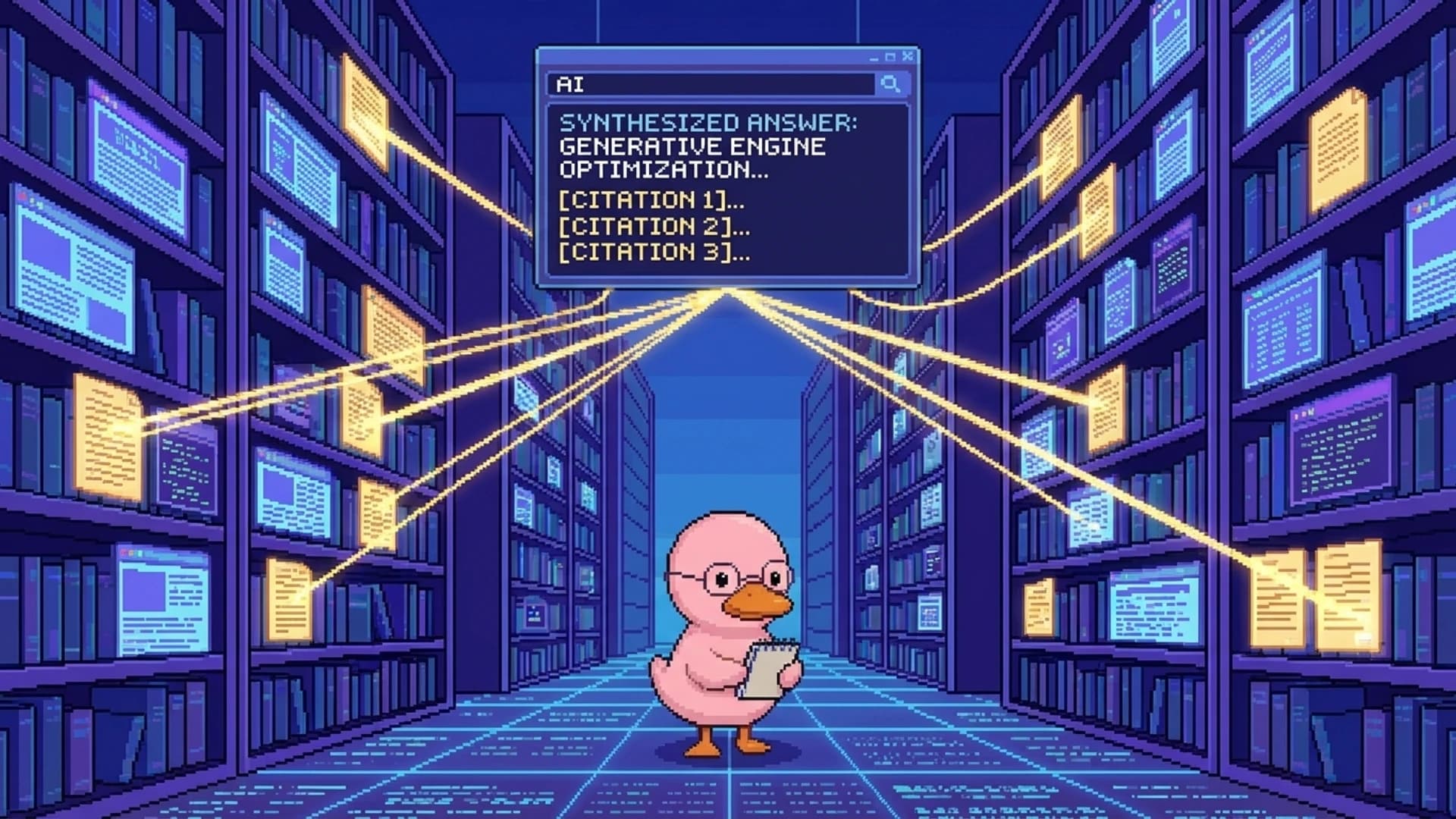
You've probably noticed something weird happening with your search traffic. Your Google rankings haven't changed, but clicks are sliding. Meanwhile, ChatGPT is processing over 37.5 million search queries per day. Perplexity handles 100 million per month. Google AI Overviews now show up on roughly 30% of all results. Your potential customers are getting answers from AI, and those answers cite sources. If your content isn't one of those sources, you're invisible on the fastest-growing search channels in existence.
That's the problem generative engine optimization solves. GEO is about making your content easy for AI to find, understand, and quote. Researchers at Princeton and IIT Delhi tested this and found that the right techniques improved visibility by up to 40%. Not a rounding error. A new playing field.
GEO gets your content cited by AI search engines. The Princeton/IIT study showed a 40% visibility boost with the right techniques. This guide covers how AI engines pick sources (the RAG pipeline), 7 optimization techniques ranked by impact, platform-by-platform differences for ChatGPT vs Perplexity vs Google AI Overviews, schema markup that actually moves the needle, and how to measure AI citations today. GEO builds on your existing SEO. It doesn't replace it.
What You'll Learn
- What the Princeton/IIT study actually found, and which single technique drove a 40% visibility boost
- How AI search engines decide what to cite: the four-stage pipeline where your content can win or lose
- Seven GEO techniques ranked by impact, with specifics on how to apply each one
- How ChatGPT, Perplexity, Google AI Overviews, and Claude each pick sources differently
- The schema markup types that matter most for AI citation, including the one most sites skip
- How to track your GEO performance right now, even without dedicated tools
What is generative engine optimization?
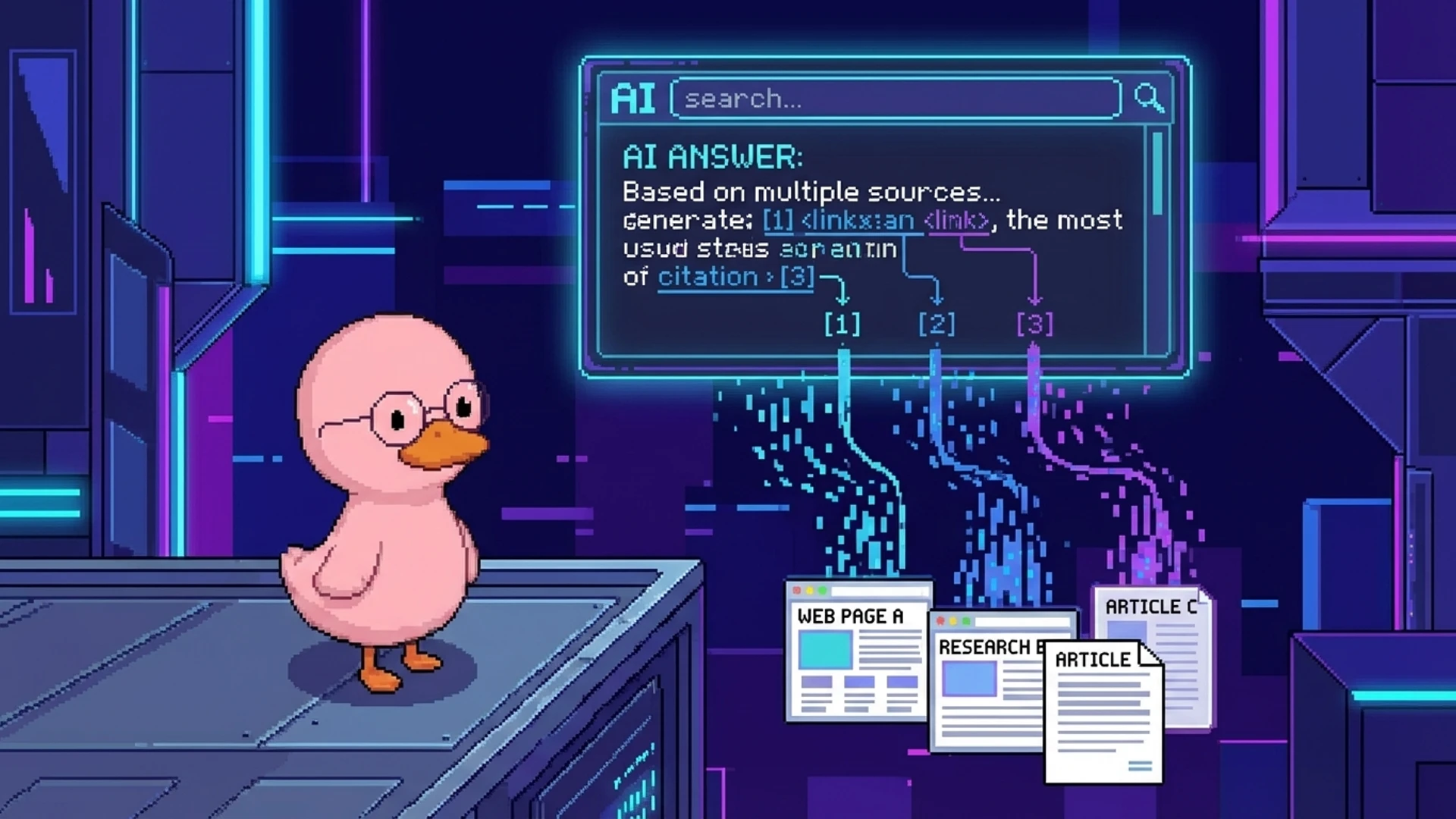
Picture someone asking ChatGPT "what's the best way to do X." The AI pulls from several sources, synthesizes an answer, and links to the pages it quoted. GEO is about making your page the one it pulls from. Where traditional SEO gets you into a list of ten blue links, GEO gets you quoted inside the answer itself.
Researchers at Princeton and IIT Delhi published the foundational study on this in 2023. They tried different ways of formatting content and measured what AI search engines actually picked up. Adding citations to authoritative sources improved visibility by 30-40% across the board. Adding statistics boosted it by 15-25%. These aren't theoretical numbers. They tested them across thousands of queries.
If you're new to the concept, our guide on what GEO is and why it matters covers the fundamentals. This pillar page goes deeper into implementation, measurement, and strategy. For a direct comparison with traditional SEO, see our GEO vs SEO breakdown.
How AI search engines decide what to cite
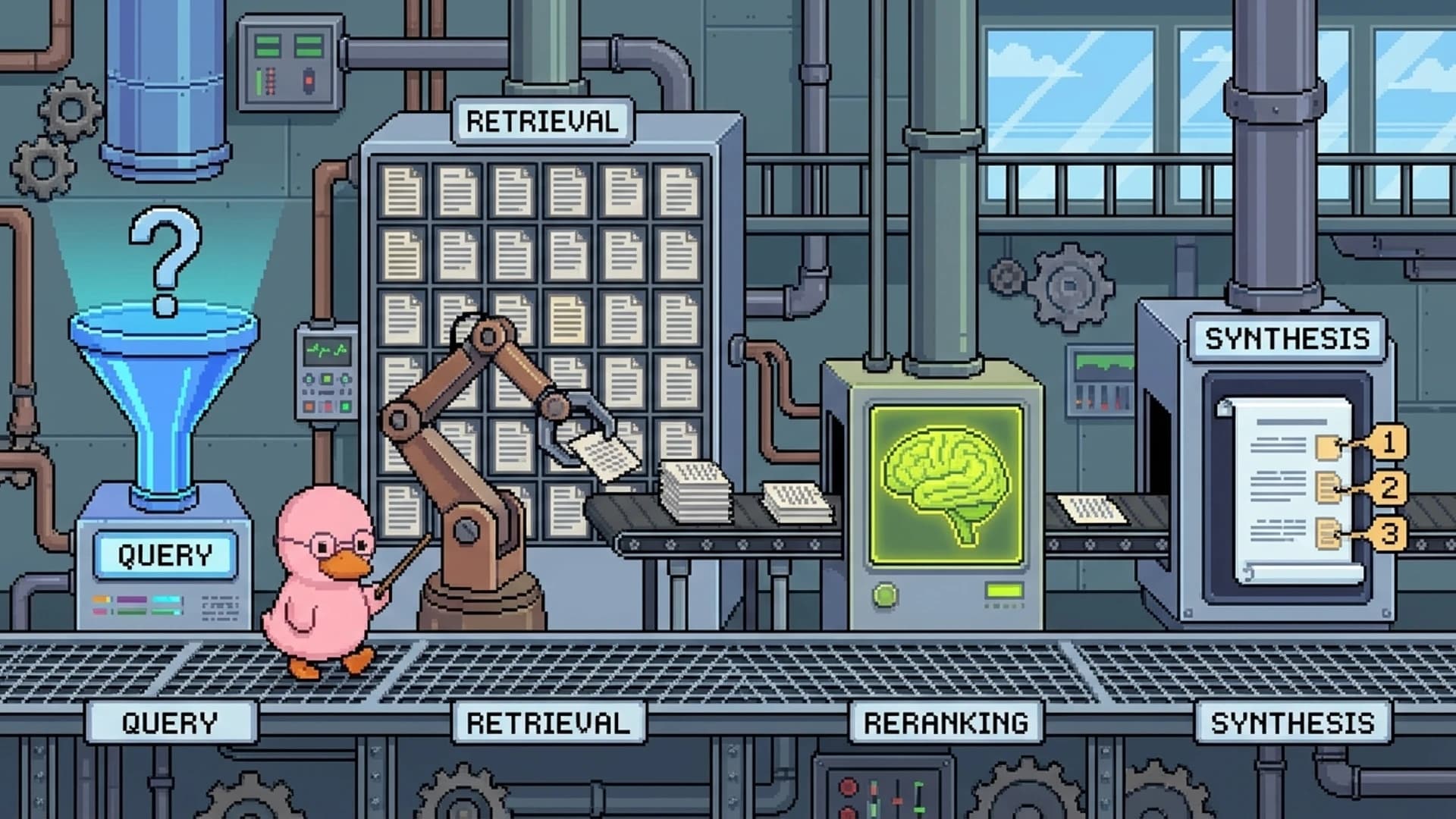
Every major AI search engine uses some version of retrieval-augmented generation (RAG). Think of it as a four-stage funnel. Your content has to pass through all four stages to get cited. Fail at any one, and you're out.
1. Query understanding
Someone types "best CRM for startups" into ChatGPT. The engine breaks that into pieces: category (CRM), audience (startups), intent (comparison). It might also search for related terms you didn't type. You can't control this stage directly. But it determines which pool of content you're competing in.
2. Retrieval
The engine searches its index using signals you'd recognize from traditional search: keyword relevance, domain authority, freshness, page quality. If your content doesn't rank or isn't crawlable by AI bots, it never makes it past this stage. This is why traditional SEO is the foundation of GEO. You can't get cited if you can't get found.
3. Reranking and selection
Here's where GEO splits from SEO. The AI reads every retrieved page and reranks them. A page might rank #1 on Google but get skipped entirely if it hedges on answers or lacks specific data. The AI wants content that directly answers the question with quotable, data-backed statements. Vague advice gets passed over. Specific numbers get cited.
4. Synthesis and citation
The AI builds its answer by pulling from multiple sources. Here's the key insight: it doesn't just cite the most authoritative source. It cites the most useful source for each specific claim. A lesser-known blog with a unique data point can beat a major publication if its information is more specific and quotable. That's good news if you're not a household name yet.
Seven GEO techniques that actually work
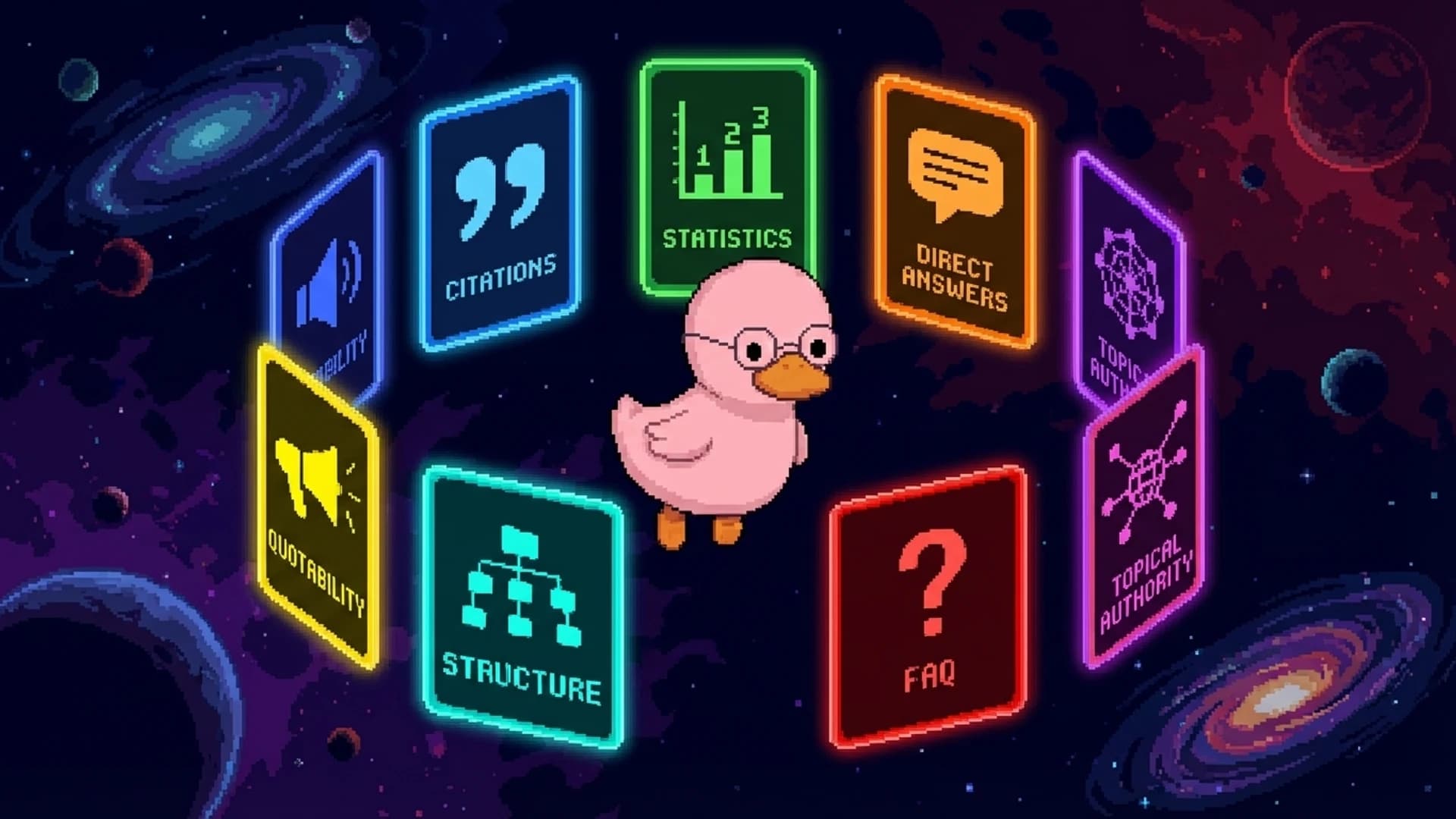
These come from the Princeton/IIT research, analysis of thousands of AI citations, and direct testing. They're ranked by impact. The first three consistently deliver the biggest gains.
1. Add authoritative citations and references
This is the single biggest lever. The Princeton/IIT study found that adding citations to authoritative sources improved visibility by 30-40%. When your content references academic papers, industry reports, or recognized institutions, AI treats it as more trustworthy. Don't just link out vaguely. Name the specific study, include the publication date, and quote the quantitative finding. "A 2023 Princeton study found a 40% visibility improvement" is citable. "Studies show it helps" is not.
2. Include unique statistics and data points
AI search engines are drawn to specific numbers the way Google is drawn to backlinks. "Our analysis of 500 SaaS sites found pages with FAQ schema were cited 3.2x more often" is quotable. "FAQ schema helps with AI search" is wallpaper. The Princeton/IIT paper found statistical additions improved visibility by 15-25%. If you have original data, survey results, or specific benchmarks, lead with them. When an AI needs a number, it cites whichever source has the best one.
3. Write direct-answer paragraphs
Start each section by answering the question your heading asks. If your H2 says "What is generative engine optimization?" then your first sentence should answer it. Not a story. Not context. Not "In today's rapidly evolving digital landscape..." AI engines extract the first 1-2 sentences after a heading. If those sentences are filler, you've already lost. Lead with the answer, then elaborate.
4. Build topical authority through content clusters
AI engines don't evaluate your page in isolation. They look at your entire domain. A single GEO article is less likely to be cited than a site with a pillar page plus supporting articles on GEO vs SEO, AI search optimization, and platform-specific guides. Build clusters of 4-8 interlinked articles around each core topic. This page is part of a cluster that includes our guides on what GEO is, GEO vs SEO, and AI search optimization.
5. Add comprehensive FAQ sections
FAQ sections are GEO gold. They match the exact format AI search engines use: question in, answer out. When someone asks ChatGPT "what is generative engine optimization," the engine looks for content that answers that exact question. FAQ sections do exactly that. Add FAQ schema markup (JSON-LD) to make them even more effective. Aim for 5-8 questions per article targeting long-tail variations of your main keyword.
6. Use clear, parseable content structure
Think of your headings as an API for AI engines. If the heading clearly describes what's in the section, the AI can find the right section for any query. Use logical H1 > H2 > H3 nesting. Keep paragraphs short. Use bulleted lists and numbered sequences. A well-structured page is dramatically easier for an AI to extract from than a wall of text.
7. Write with quotability in mind
AI engines cite content by extracting specific passages. So write sentences that stand alone. "GEO improves AI visibility by up to 40% according to the Princeton/IIT study" is quotable. "As we discussed earlier, there are many ways to improve how often AI tools mention your content" is not. Every paragraph should contain at least one sentence an AI could drop into a response and have it make perfect sense without context.

duqky's Content Worker applies every GEO technique in this guide automatically: schema markup, FAQ sections, direct-answer formatting, citation inclusion, and topical clustering. Every article is optimized for both Google and AI citations from the start.
See how it works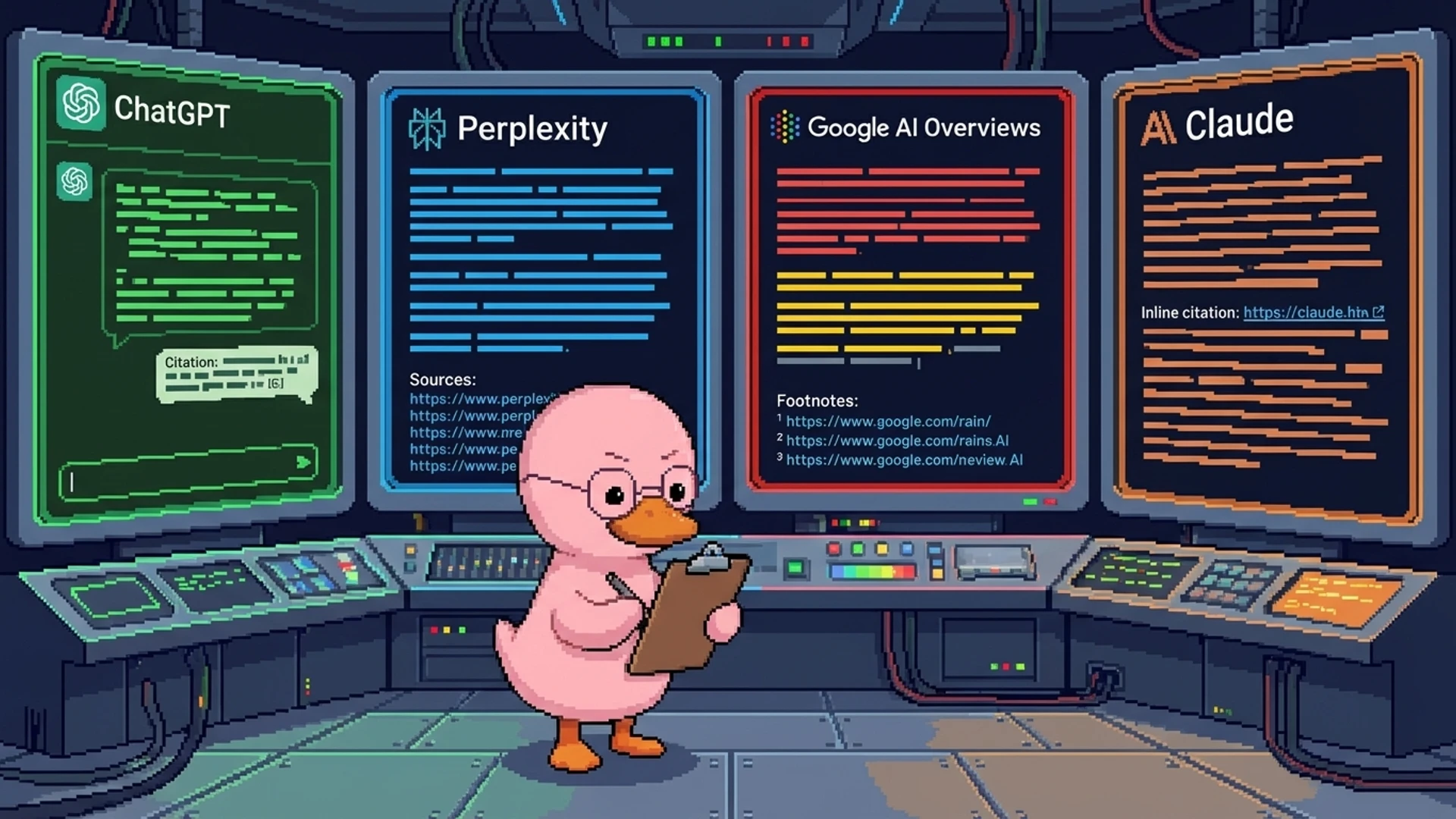
How each AI platform picks sources differently
Not all AI search engines behave the same way. Optimizing for "AI search" as one thing is a mistake. Each platform has different crawlers, different source preferences, and different citation habits. For a deeper dive, see our AI search optimization guide.
- ChatGPT Search: pulls from Bing's index, cites 3-6 sources per response, favors comprehensive content with clear author attribution. Content freshness matters but isn't the top signal.
- Perplexity: the citation machine (8-15 inline citations per response). Heavily weights recency. Pages that cite their own sources get cited more. If you have unique data, Perplexity is where it pays off most.
- Google AI Overviews: most tied to traditional SEO signals. If you rank in the top 10, you're disproportionately likely to be cited. Schema markup has the strongest influence here. Cites 2-4 sources.
- Claude: favors depth and nuance over surface coverage. More likely to cite content that acknowledges complexity and presents evidence. Comprehensive analysis beats keyword-stuffed listicles.
- Microsoft Copilot: uses Bing's index with different reranking. Embedded in Windows and Office, so it favors practical, business-applicable content. Cites 2-4 sources.
Cross-platform strategy
Don't optimize for one platform at the expense of others. The fundamentals work everywhere: authoritative citations, unique data, direct answers, clear structure. Apply those universally. Then fine-tune: extra schema for Google AI Overviews, emphasize recency for Perplexity, go deeper for Claude.

Technical GEO: schema markup and AI crawlers
Technical GEO is the plumbing that makes everything else work. Two things matter most: schema markup that helps AI engines understand your content, and robots.txt settings that control whether AI crawlers can access it at all.
Here are the schema types that matter, ranked by impact. (1) FAQPage schema. This maps directly to how people query AI engines and is the single highest-impact type. (2) Article schema with full author markup: name, LinkedIn, jobTitle. This feeds E-E-A-T signals. (3) HowTo schema for step-by-step processes. AI engines can extract these directly. (4) Organization schema for brand identity. (5) Speakable schema that flags sections as good candidates for AI extraction.
Check your robots.txt right now
Many robots.txt templates block AI crawlers by default. If you see "Disallow: /" for GPTBot, PerplexityBot, or ClaudeBot, you're invisible to those platforms. Allow all AI crawlers for public content: GPTBot (OpenAI), ChatGPT-User, PerplexityBot, ClaudeBot (Anthropic), Google-Extended, and Applebot-Extended.
How to measure GEO performance
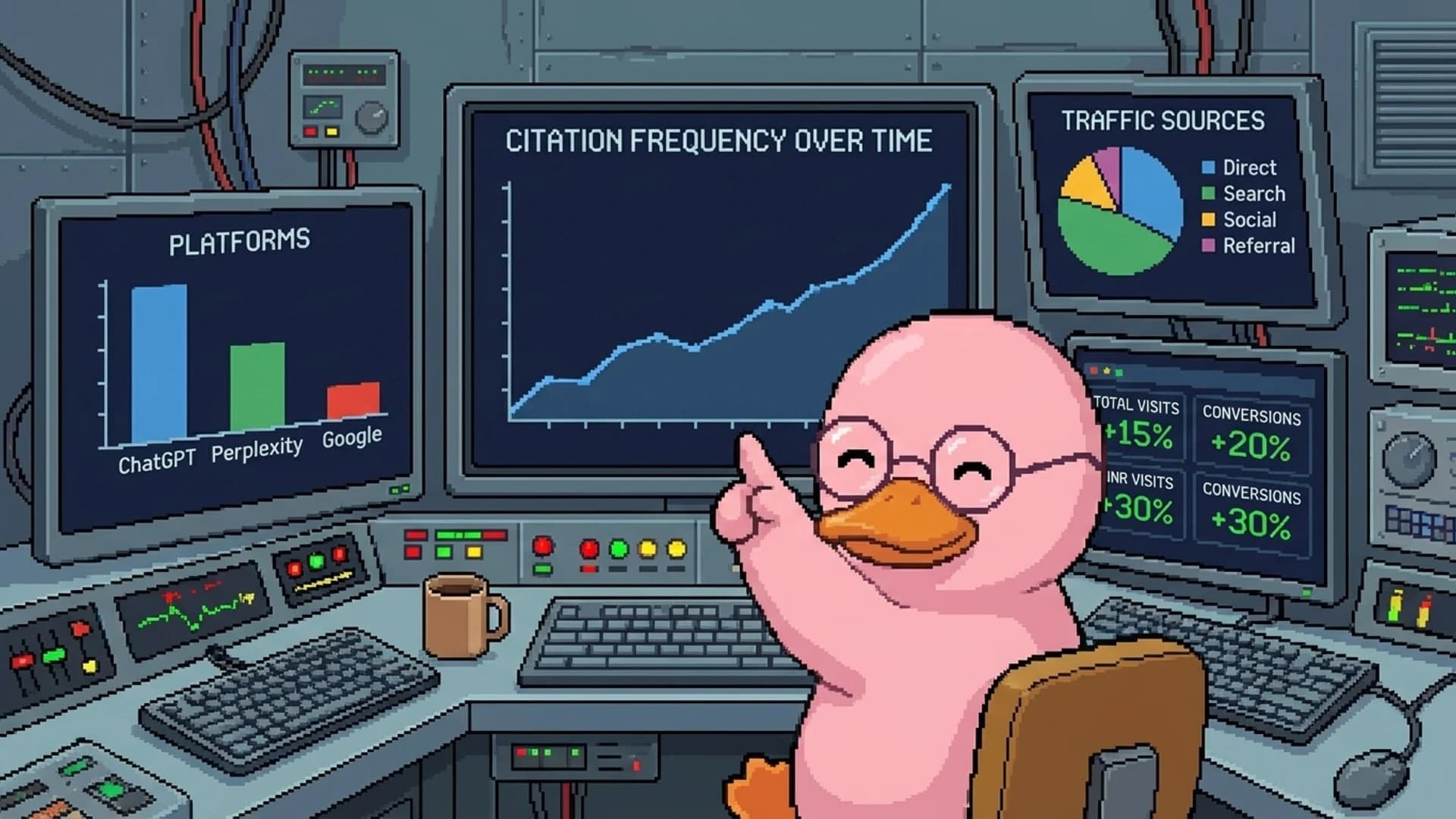
There's no Google Search Console for AI citations. Not yet. But you can still track performance with a practical framework.
- AI referral traffic. Set up GA4 tracking for referrals from chat.openai.com, chatgpt.com, perplexity.ai, and bing.com/chat. Create a custom "AI Search" channel group so you can track it as one number.
- Manual citation auditing. Once a week, search your target keywords in each AI platform. Track whether you're cited, where in the response, what text gets quoted, and who else shows up. It's manual, but it's the highest-fidelity data you'll get.
- GEO monitoring tools. Otterly.ai and Profound track citations across platforms. Semrush and Ahrefs have added AI visibility metrics. These tools are maturing fast.
- Brand mention tracking. Watch for your brand appearing in AI responses even without a link. ChatGPT saying "tools like Semrush, Ahrefs, and duqky" is still brand visibility that drives downstream searches.
Here's why this matters now, not later. AI search query volume is growing 5-10x year-over-year while traditional search has flatlined. The keyword "generative engine optimization" grew from 1,600 to 5,400 monthly searches in 12 months. And there's a flywheel effect: once an AI engine identifies your site as authoritative, it cites you more often, which reinforces the authority signal. Early movers are building citation momentum that compounds. Waiting means playing catch-up against entrenched competitors.
Building a unified SEO + GEO strategy
The companies winning organic traffic in 2026 don't run separate SEO and GEO programs. They run one unified strategy. About 70% of what makes content rank well in traditional search also makes it perform in AI engines. The other 30% is GEO-specific optimization layered on top.
The framework is straightforward. (1) Audit your robots.txt and schema coverage. (2) Fix technical blockers first. (3) Retrofit your top 20 pages with direct-answer paragraphs, citations, statistics, and FAQ sections with schema. (4) Build GEO requirements into every new content brief going forward. (5) Organize content into topical clusters with internal linking. (6) Monitor citations weekly and iterate. When GEO is baked into the brief from day one, it adds zero extra cost to content production.
GEO cost reality
If you're already doing SEO, adding GEO typically costs 10-20% more. That's mostly schema implementation (one-time $500-2,000), content reformatting ($50-200 per article), and monitoring tools ($100-300/month). AI SEO agents like duqky apply GEO optimizations to every article automatically, at no additional per-article cost.
Frequently asked questions
Frequently Asked Questions
GEO is how you get your content cited by AI-powered search engines like ChatGPT, Perplexity, and Google AI Overviews. Instead of trying to rank in a list of ten links, you're trying to get quoted inside the AI's answer. The Princeton/IIT Delhi study found that specific GEO techniques can boost your visibility in AI responses by up to 40%.
About 70% of GEO is the same as SEO: keyword research, topical authority, backlinks, technical optimization. The 30% that's different is GEO-specific: writing direct-answer paragraphs, adding citation-dense content, making text quotable, letting AI crawlers access your pages, and implementing deeper structured data. GEO extends your SEO. It doesn't replace it. See our detailed <a href="/blog/geo-vs-seo">GEO vs SEO comparison</a>.
Adding authoritative citations is the single biggest lever. The Princeton/IIT study showed a 30-40% visibility improvement from citations alone. Including unique statistics added another 15-25%. After those two, the highest-impact techniques are direct-answer paragraphs, FAQ sections with schema markup, and topical authority through content clusters.
Set up GA4 to track referrals from ChatGPT, Perplexity, and other AI search sources. Do weekly manual citation audits across platforms. Use tools like Otterly.ai or Profound for automated tracking. And monitor brand mentions in AI responses, even when there's no direct link back to your site.
It actually works better for small websites. The Princeton/IIT research found that content from less popular domains saw larger visibility improvements from GEO than content from established sites. If you're a smaller player, GEO is one of the best ways to get cited alongside much bigger competitors.
If you're already doing SEO, GEO adds about 10-20% in extra cost: schema implementation, content reformatting, and monitoring tools ($100-300/month). If you're starting from scratch, the cost is basically the same as SEO when you build GEO formatting into your process from day one. AI SEO agents apply GEO optimizations automatically with no extra per-article cost.

duqky's AI marketing team handles content, outreach, and technical SEO, with GEO optimization built into every piece of content. Start free with 500 credits and see the difference.
Get started freeSources
- Aggarwal, P., et al. "GEO: Generative Engine Optimization." Princeton University & IIT Delhi, 2023.
- Search Engine Land. "What is generative engine optimization (GEO)?" Comprehensive guide to GEO.
- Semrush. "Generative Engine Optimization: The New Era of Search." GEO strategies and measurement.
- WIRED. "Forget SEO. Welcome to Generative Engine Optimization." Industry overview of the GEO shift.
- Google Search Central. "AI-generated content and Google Search." Google's guidance on AI content.
